
Best Diaphragmatic Hernia Surgeon in Kanpur
A diaphragmatic hernia can be frightening to read about, especially when the symptoms are unclear or a doctor has just mentioned the word “surgery.” This page explains what a diaphragmatic hernia is, how it differs from a hiatal hernia, and what treatment looks like in Kanpur under the care of Dr. Abhinav Sengar, a gastro surgeon with 14 years of experience in stomach, gallbladder, liver, and pancreatic conditions at Tulip Hospital.
Appointment Form
Request a consultation
Share a few details and our team will call you back to confirm your appointment.
Diaphragmatic Hernia Surgery Procedures
Bariatric surgery includes a range of procedures designed to support meaningful weight loss and improve health conditions associated with excess weight. Dr. Abhinav Sengar evaluates each patient’s health, weight history, and treatment goals before recommending the most appropriate procedure.
Diaphragmatic Hernia Surgery
Surgical treatment to return herniated abdominal organs to their normal position and repair the opening in the diaphragm.
Laparoscopic Hernia Repair
A minimally invasive approach using small incisions to repair the diaphragmatic hernia, generally allowing less postoperative discomfort and quicker recovery.
Complex & Recurrent Hernia Management
Specialized surgical management for large, complicated, or recurrent diaphragmatic hernias to restore normal anatomy and reduce the risk of recurrence.
What Is a Diaphragmatic Hernia?
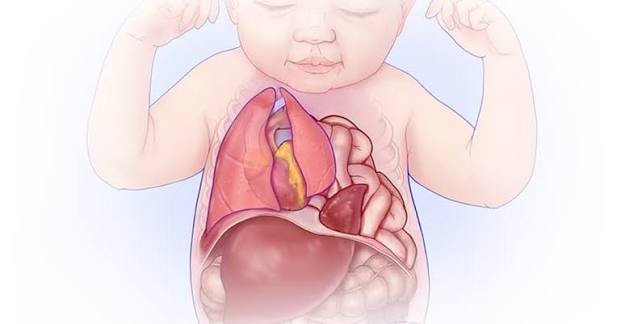
The diaphragm is the dome-shaped muscle that separates the chest from the abdomen and plays a central role in breathing. A diaphragmatic hernia occurs when there is an abnormal opening or weakness in this muscle, allowing abdominal organs such as the stomach or intestines to move upward into the chest cavity. This can affect how well the lungs expand and how the digestive system functions.
How It Differs From a Common Abdominal Hernia
Most people are familiar with abdominal wall hernias, where tissue pushes through a weak spot in the belly muscles. A diaphragmatic hernia is different because it involves the muscle separating the chest and abdomen, not the abdominal wall itself. Because the diaphragm also supports breathing, this type of hernia can affect respiratory function in a way that a groin or umbilical hernia does not.
Diaphragmatic Hernia vs Hiatal Hernia – What's the Difference?
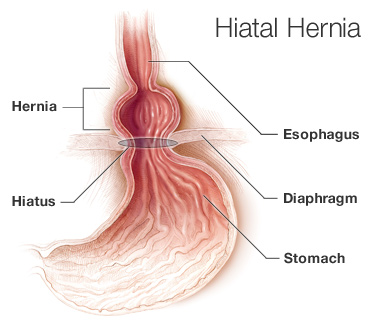
These two conditions are related but not identical, and the terms are often confused. A hiatal hernia is technically a specific type of diaphragmatic hernia, where the upper part of the stomach pushes through the diaphragm’s natural opening for the food pipe, called the hiatus. The term “diaphragmatic hernia” more broadly includes hiatal hernias as well as hernias that occur through other weak points or defects in the diaphragm, including those present from birth or caused by injury.
Symptom Overlap and Key Distinctions
Hiatal hernias commonly cause heartburn, acid reflux, and a burning sensation after meals, since stomach acid can move upward more easily. Diaphragmatic hernias that are congenital or traumatic in origin often present differently, with breathing difficulty, chest discomfort, or reduced oxygen levels being more prominent, particularly when a larger portion of the abdominal organs has shifted into the chest. An accurate diagnosis by a gastro surgeon is important because the two conditions, while related, are evaluated and treated somewhat differently.
Types of Diaphragmatic Hernia
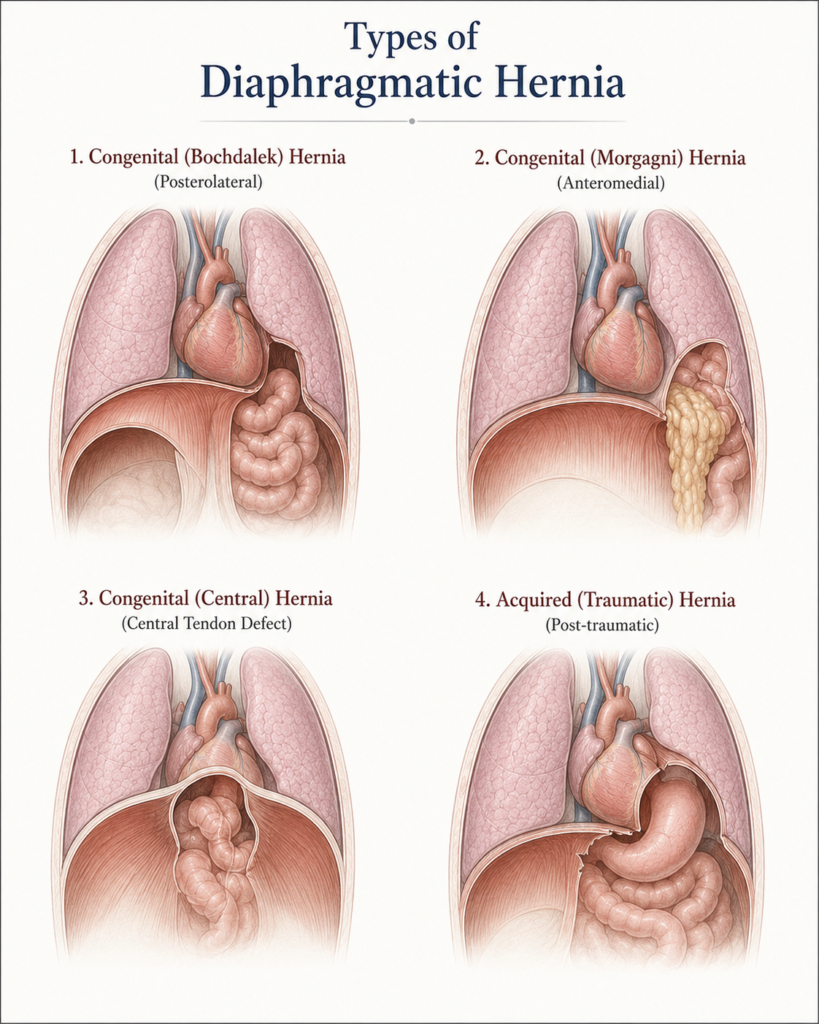
Diaphragmatic hernias are generally grouped by cause and timing, and each requires a slightly different clinical approach.
Congenital Diaphragmatic Hernia (CDH)
This type is present from birth, occurring when the diaphragm does not fully form during fetal development. It is usually identified in newborns or during prenatal scans, and it requires prompt evaluation by a surgical team experienced in neonatal and pediatric hernia repair.
Traumatic and Acquired Diaphragmatic Hernia
This form develops later in life, most often following a significant injury to the chest or abdomen, such as from an accident. The diaphragm tears or weakens, allowing abdominal contents to enter the chest cavity. Symptoms may appear immediately after the injury or, in some cases, months or years later.
Diaphragm Eventration
Eventration is a condition where the diaphragm is abnormally thin, weak, or elevated, without an actual tear or opening. It can be present from birth or develop due to nerve-related causes, and it may still require surgical reconstruction if it significantly affects breathing.
Symptoms to Watch For
In Adults
- Chest discomfort or a feeling of pressure, especially after eating
- Shortness of breath, particularly when lying down
- Persistent heartburn or acid reflux
- Difficulty swallowing or a sensation of food getting stuck
- Reduced exercise tolerance or unexplained fatigue
In Newborns and Infants
- Rapid or laboured breathing shortly after birth
- Bluish discolouration of the skin (a sign of low oxygen)
- A sunken appearance of the abdomen
- Difficulty feeding
If you notice any of these signs in a newborn, this needs urgent medical attention rather than a routine consultation.
When to See a Gastro Surgeon
You should consult a gastro surgeon if you experience ongoing chest discomfort combined with digestive symptoms, breathing difficulty that worsens after meals or while lying flat, or if a hernia has been suspected on a scan done for another reason. Early evaluation generally leads to more treatment options and a more straightforward recovery, so it is worth seeking an opinion even if symptoms seem mild or intermittent.
Why Patients Trust Dr. Abhinav Sengar
Dr. Abhinav Sengar brings specialized gastro-surgical training, extensive hands-on experience, and a genuinely patient-focused approach to digestive and abdominal care in Kanpur.

Qualifications
- MBBS — CSJM University
- MS General Surgery — CSJM University
- DNB Gastro Surgery — National Board of Examinations (NBE)
- FIAGES — Fellow, Indian Association of Gastrointestinal Endo Surgeons
14+ years
of specialized gastro-surgical practice
9 focus areas
across stomach, gallbladder, liver & pancreas care
Specialized training in General Surgery and Gastro Surgery (DNB)
Fellow of the Indian Association of Gastrointestinal Endo Surgeons (FIAGES)
Expertise across stomach, gallbladder, liver, and pancreatic disorders
Evidence-based, personalized treatment — not a generic protocol
Clear communication and a patient-first approach
Trusted by patients across Kanpur and surrounding regions
Diagnosis and Treatment Approach at Tulip Hospital
Diagnostic Process
Diagnosis typically begins with a detailed clinical history and physical examination, followed by imaging such as a chest X-ray, CT scan, or upper GI endoscopy to confirm the position of the diaphragm and identify which organs have moved into the chest cavity. In infants, prenatal ultrasound can sometimes detect a congenital diaphragmatic hernia before birth, allowing the care team to plan delivery and immediate treatment in advance.
Laparoscopic Repair Explained
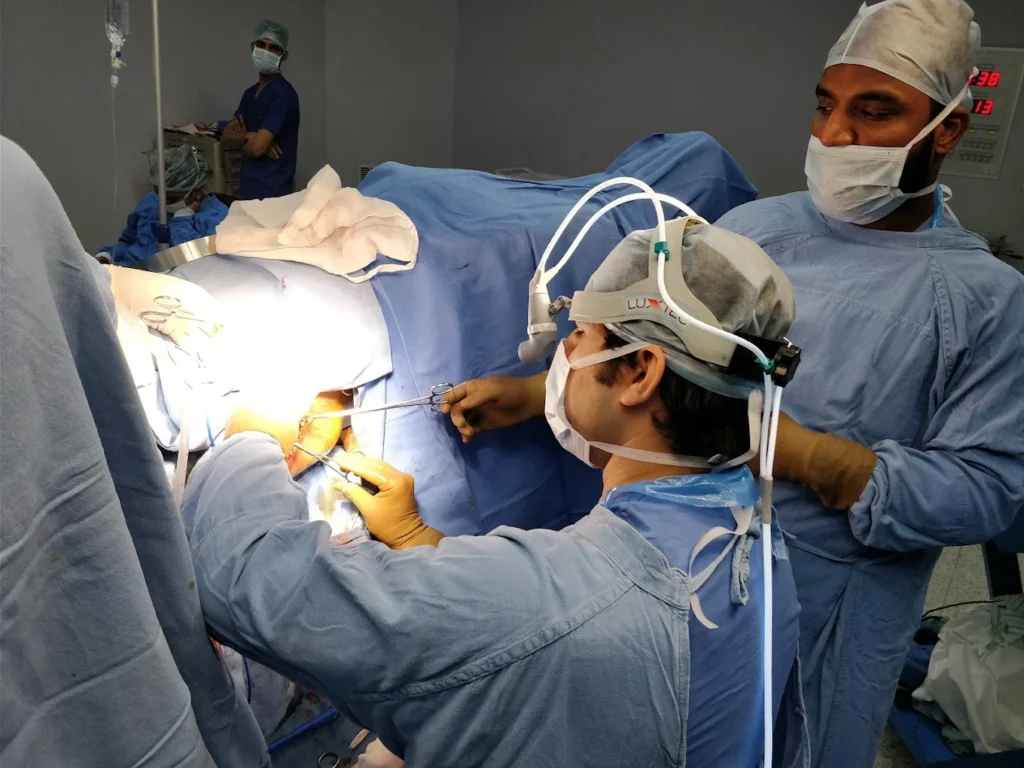
Dr. Abhinav Sengar performs diaphragmatic and hiatal hernia repair using a laparoscopic, minimally invasive approach where clinically appropriate. This involves a small number of tiny incisions rather than a single large cut, through which the surgeon repositions the displaced organs and repairs the diaphragm, often reinforcing the repair with sutures or, in select cases, a surgical mesh. Compared to open surgery, a laparoscopic approach is generally associated with less post-operative pain, a smaller scar, and a quicker return to normal activity, though the right approach for each patient is decided after a full evaluation.
Areas We Serve
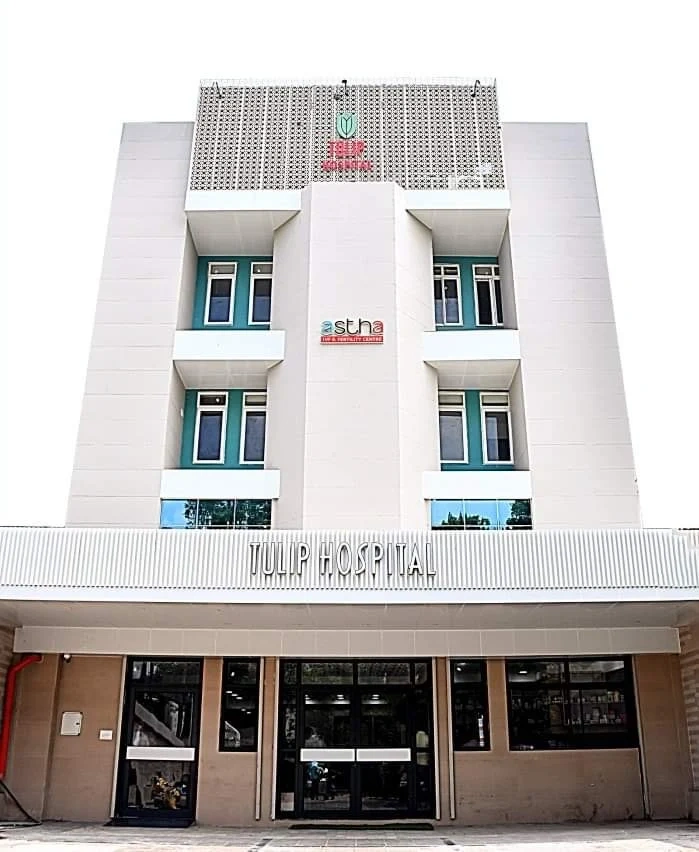
Tulip Hospital is located in Kakadeo, Kanpur, and welcomes patients from across the city as well as surrounding districts seeking expert liver and gastrointestinal surgical care.
Serving Kakadeo, Swaroop Nagar, Civil Lines and Beyond
Patients regularly travel to Dr. Abhinav Sengar’s clinic from areas including Kakadeo, Swaroop Nagar, Civil Lines, Kalyanpur, Govind Nagar, and Kidwai Nagar, as well as from nearby districts such as Kanpur Dehat, Unnao, and Fatehpur. Whichever part of the region you are coming from, our team can guide you on appointment timings and what to bring for your first visit.
Frequently Asked Questions
Q1. What is a diaphragmatic hernia?
It is a condition in which an opening or weakness in the diaphragm allows abdominal organs to move into the chest cavity, which can affect both breathing and digestion.
Q2. What causes a diaphragmatic hernia in adults?
In adults, it is most often caused by a traumatic injury to the chest or abdomen that tears the diaphragm, though eventration (a weak, thinned diaphragm) can also be responsible without any injury.
Q3. Is congenital diaphragmatic hernia curable?
Congenital diaphragmatic hernia is treatable with surgical repair. Outcomes depend on factors such as the size of the defect and the degree of lung development, and your surgical team will explain the specific outlook for your case.
Q4. What is the difference between diaphragmatic hernia and hiatal hernia?
A hiatal hernia is one specific type of diaphragmatic hernia, occurring at the diaphragm’s natural opening for the food pipe. “Diaphragmatic hernia” is the broader term that also includes congenital, traumatic, and eventration-related hernias elsewhere in the diaphragm.
Q5. Is diaphragmatic hernia surgery safe?
As with any surgery, there are risks, but laparoscopic repair by an experienced gastro surgeon is a well-established treatment approach. Dr. Sengar will discuss the specific risks and benefits relevant to your case during your consultation.
Q6. How long does recovery take after hernia surgery?
Recovery time varies based on the type of repair and each patient’s overall health. Most patients are guided through a phased return to normal diet and activity, with a personalised recovery timeline provided after your procedure..
Q7. What is laparoscopic hernia repair?
It is a minimally invasive surgical technique using small incisions and a camera-guided approach to repair the diaphragm, generally associated with less pain and a faster return to daily activities compared to open surgery.
Book Your Consultation
Tulip Hospital 117/439, H Block, Pandu Nagar, near Police Station and Paliwal Diagnostics, Kakadeo, Kanpur, Uttar Pradesh 208005 Phone: 7080999988 / 7080180033 | Open 24 Hours Appointment required. Call, WhatsApp, or book online to consult Dr. Abhinav Sengar. |