GI Surgeon in Kanpur | Dr. Abhinav Sengar, Tulip Hospital
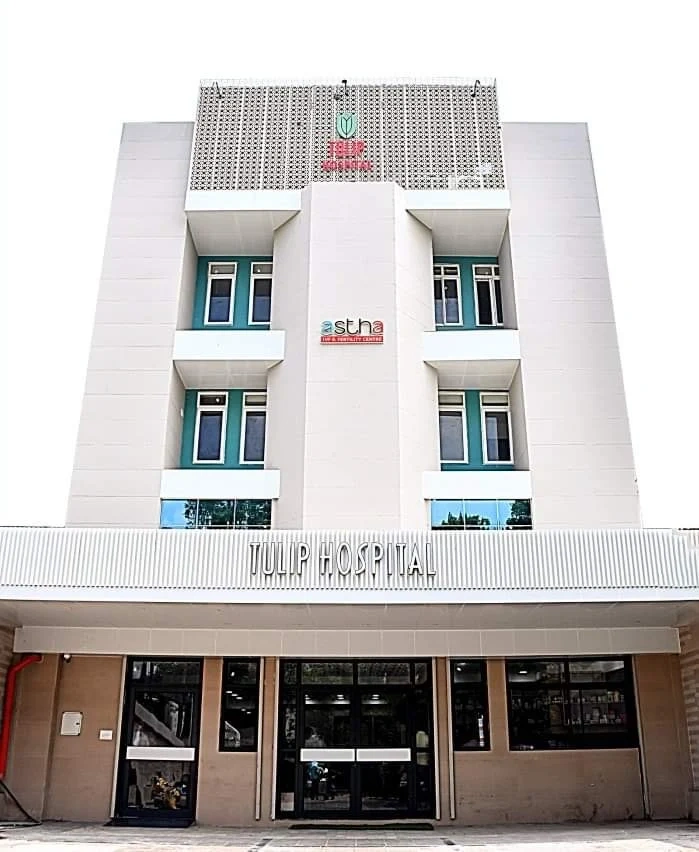
If you are dealing with persistent acid reflux, gallstones, difficulty swallowing, or other digestive concerns, finding the right gastro surgeon in Kanpur can make all the difference. Dr. Abhinav Sengar is a gastrointestinal surgeon at Tulip Hospital, Kakadeo, specializing in the stomach, gallbladder, liver, and pancreas. With 14 years of experience and advanced laparoscopic training, he offers surgical care built on careful diagnosis and a minimally invasive approach wherever possible.
Appointment Form
Request a consultation
Share a few details and our team will call you back to confirm your appointment.
Types of GI Surgery
Upper GI surgery includes procedures focused on treating conditions affecting the stomach, oesophagus, and upper digestive tract. Dr. Abhinav Sengar evaluates each patient’s symptoms, overall health, and underlying condition before recommending the most appropriate surgical approach.
GERD Surgery
Surgical treatment designed to reduce acid reflux and improve the function of the valve between the stomach and esophagus.
Hiatal Hernia Repair
Corrects a hiatal hernia by repositioning the stomach and strengthening the opening in the diaphragm.
Fundoplication
A procedure that wraps the upper part of the stomach around the esophagus to help prevent acid reflux.
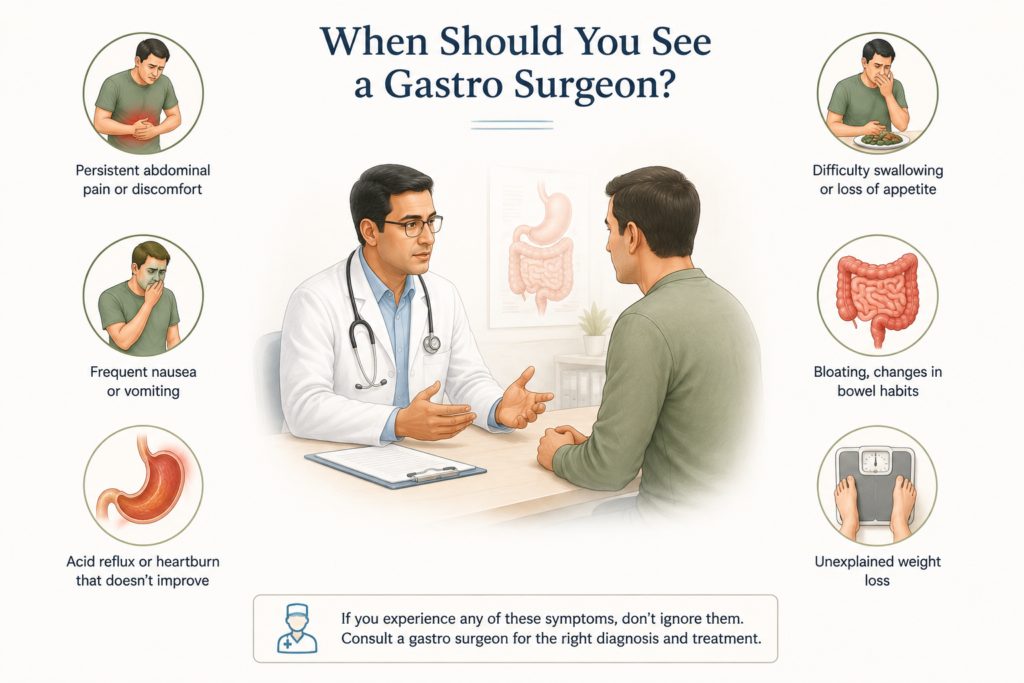
When Should You See a Gastro Surgeon?
Many digestive problems are first managed with medication and lifestyle changes. A gastro surgeon becomes relevant when symptoms persist, worsen, or point to a structural problem that medicine alone cannot fix.
Common Warning Signs & Symptoms
- Frequent heartburn or acid regurgitation that does not settle with medication
- Difficulty or pain while swallowing food or liquids
- Chronic cough, hoarseness, or sore throat linked to reflux
- Pain in the upper right abdomen, especially after fatty meals
- Unexplained weight loss alongside digestive symptoms
- Bloating, chest discomfort, or a feeling of food getting stuck
Conditions That May Require Surgical Evaluation
- Gastroesophageal Reflux Disease (GERD) not controlled by medicines
- Hiatal hernia
- Achalasia cardia (swallowing disorder)
- Gallstones and gallbladder disease
- Suspected gastrointestinal tumors or growths
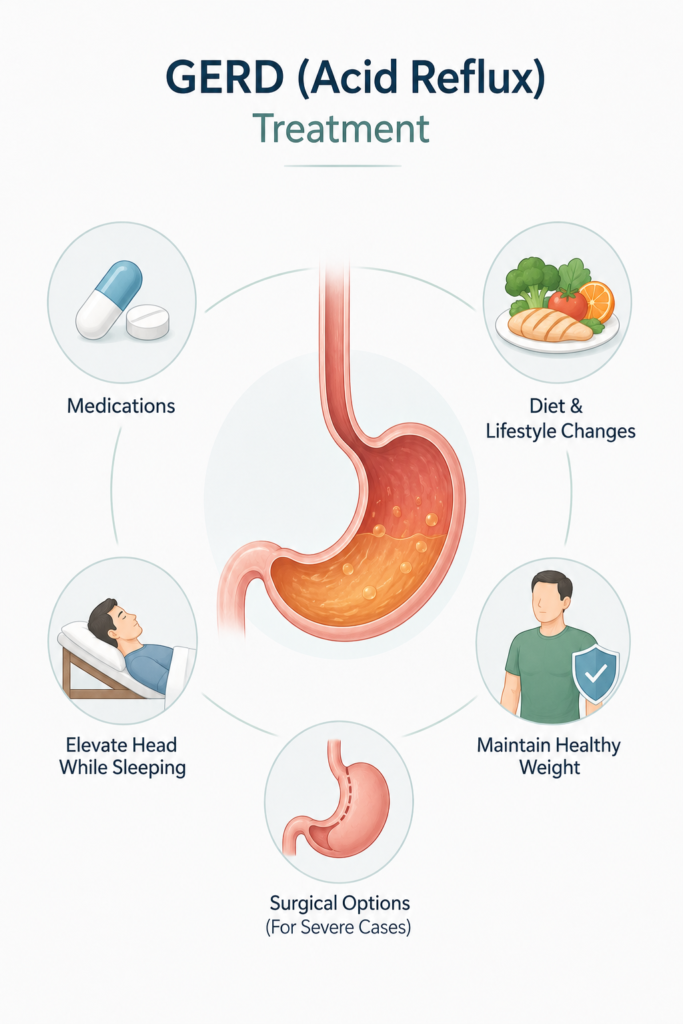
GERD (Acid Reflux) Treatment & Surgery in Kanpur
Gastroesophageal Reflux Disease, or GERD, is a chronic condition where stomach acid repeatedly flows back into the esophagus, causing irritation and discomfort. Most patients improve with medication and dietary changes, but some continue to experience symptoms or develop complications that call for a more permanent solution.
Symptoms of GERD
- Frequent heartburn and acid regurgitation
- Burning sensation in the chest
- Difficulty swallowing
- Chronic cough, hoarseness, or sore throat
- Disturbed sleep due to nighttime reflux
When Is Surgery Recommended?
Surgery is generally considered when symptoms persist despite long-term medication, when a large hiatal hernia is present, when GERD begins interfering with daily life, or when complications such as Barrett’s esophagus or recurrent aspiration develop.
Laparoscopic Fundoplication Explained
The most common surgical option for GERD is laparoscopic fundoplication, in which the upper part of the stomach is wrapped around the lower esophagus to reinforce the valve that prevents acid from flowing back up. Being minimally invasive, it is associated with smaller incisions, less post-operative discomfort, and a quicker return to normal activity compared to open surgery. Most patients are discharged within one to three days and gradually resume normal eating under medical guidance.
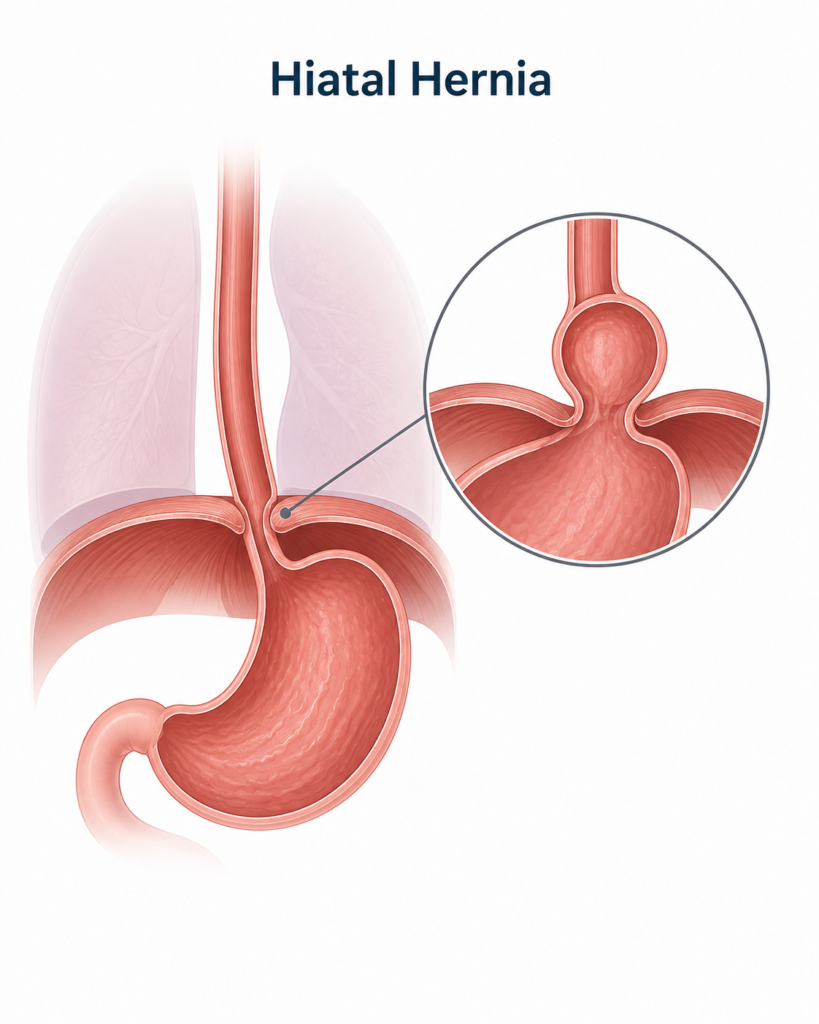
Hiatal Hernia
A hiatal hernia occurs when part of the stomach pushes upward through the diaphragm into the chest cavity. It is closely linked with chronic acid reflux and can require surgical correction when symptoms are persistent or complications arise.
Symptoms & Diagnosis
- Heartburn and acid reflux
- Chest discomfort
- Difficulty swallowing or regurgitation
- Bloating after meals
- Shortness of breath in larger hernias
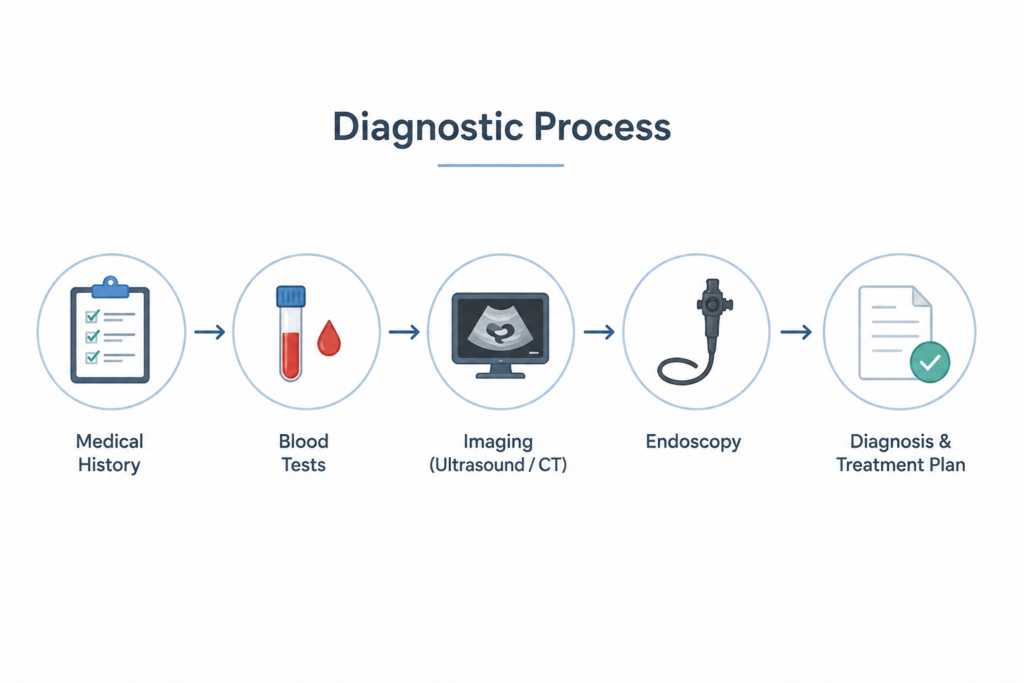
Diagnosis typically combines a clinical evaluation with imaging and endoscopic tests to assess the size of the hernia and its effect on the esophagus.
Surgical Treatment Approach
Treatment usually involves laparoscopic repair of the diaphragmatic opening, often combined with a fundoplication to reduce ongoing reflux. This restores the stomach to its normal position, eases swallowing, and lowers the risk of future complications such as obstruction or strangulation.
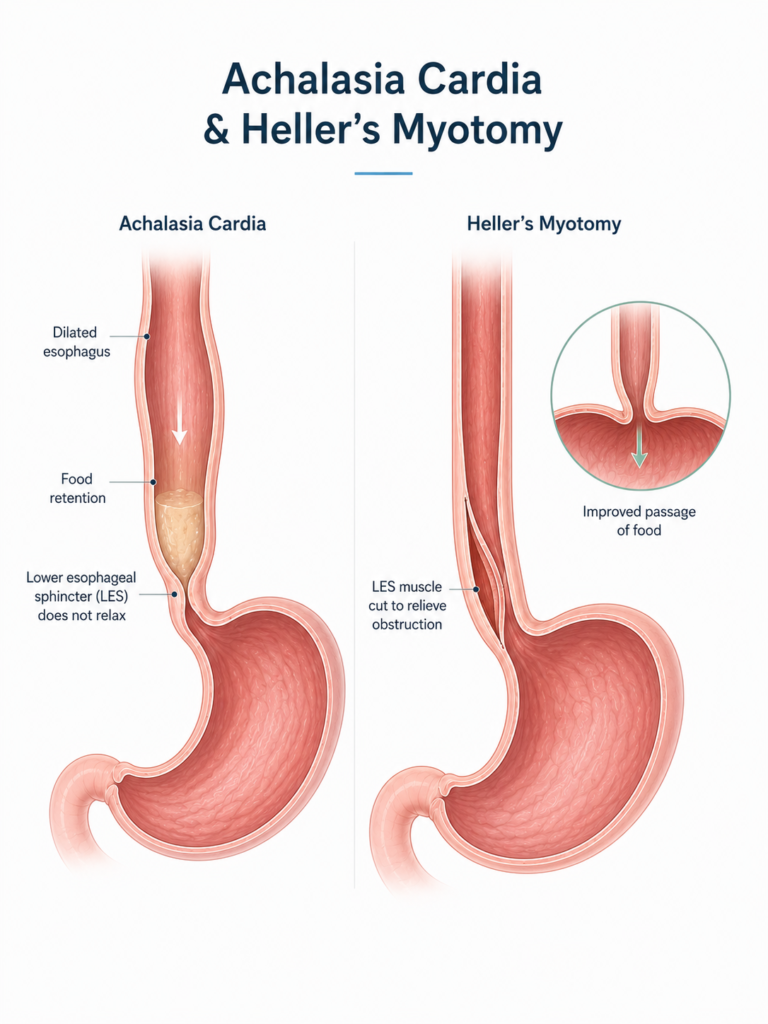
Achalasia Cardia & Heller's Myotomy
Achalasia cardia is a condition in which the lower esophageal sphincter fails to relax properly, making it hard for food and liquids to pass into the stomach. Heller’s myotomy is the surgical procedure used to treat it, involving careful division of the tight muscle fibers at the lower end of the esophagus. It is often combined with a partial fundoplication to lower the risk of reflux afterward.
Recognizing Achalasia Symptoms
- Difficulty swallowing both solids and liquids
- Regurgitation of undigested food
- Chest pain
- Unexplained weight loss
- Nighttime cough or recurrent chest infections
How the Procedure Helps
Most patients notice a meaningful improvement in swallowing after the procedure and are gradually able to return to a normal diet as advised by their surgeon, along with reduced regurgitation and better overall nutrition.
Laparoscopic Gallbladder Surgery
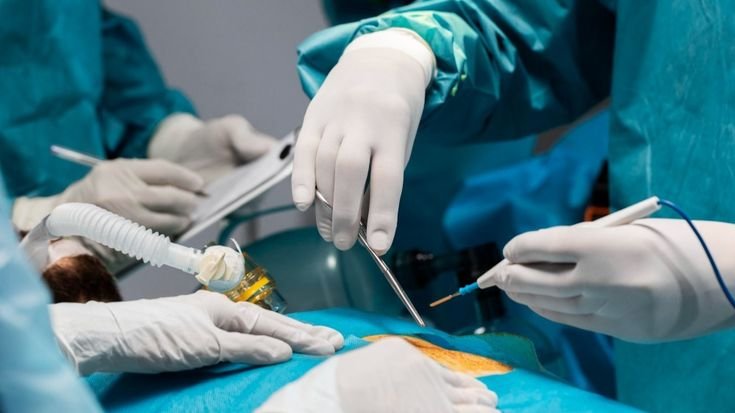
Gallstones and gallbladder inflammation are among the most common reasons patients in Kanpur consult a GI surgeon. When stones cause repeated pain, infection, or blockage, laparoscopic removal of the gallbladder is usually the recommended treatment.
Signs You May Need Gallbladder Surgery
- Recurring pain in the upper right abdomen, often after meals
- Nausea or vomiting linked to fatty food
- Fever or signs of infection related to the gallbladder
- Gallstones confirmed on ultrasound with ongoing symptoms
Benefits of the Laparoscopic Approach
- Smaller incisions and less visible scarring
- Reduced post-operative pain
- Shorter hospital stay compared to open surgery
- Faster return to daily activities
Diagnostic Evaluation Before Surgery
Before recommending any surgical approach, Dr. Abhinav Sengar carries out a thorough evaluation to understand the exact nature of the problem. This may include upper GI endoscopy, barium swallow studies, esophageal manometry, pH monitoring, and CT imaging, depending on the symptoms involved. The findings guide the most appropriate treatment path, whether that means continued medical management or a specific surgical procedure.
Recovery & What to Expect After Surgery
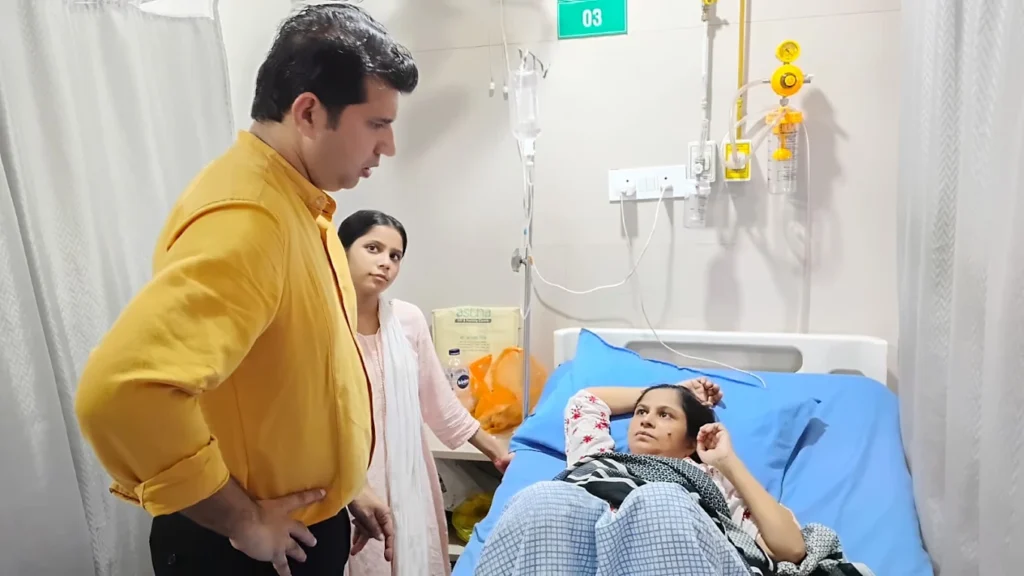
Recovery timelines vary by procedure, but laparoscopic surgery generally allows for a shorter hospital stay and faster return to daily routine than open surgery. For procedures such as fundoplication, patients are typically discharged within one to three days and gradually resume a normal diet and activity level under Dr. Abhinav Sengar’s guidance. Your specific recovery plan will be discussed in detail during your consultation, based on your diagnosis and overall health.
Why Patients Trust Dr. Abhinav Sengar
Dr. Abhinav Sengar brings specialized gastro-surgical training, extensive hands-on experience, and a genuinely patient-focused approach to digestive and abdominal care in Kanpur.

Qualifications
- MBBS — CSJM University
- MS General Surgery — CSJM University
- DNB Gastro Surgery — National Board of Examinations (NBE)
- FIAGES — Fellow, Indian Association of Gastrointestinal Endo Surgeons
14+ years
of specialized gastro-surgical practice
9 focus areas
across stomach, gallbladder, liver & pancreas care
Specialized training in General Surgery and Gastro Surgery (DNB)
Fellow of the Indian Association of Gastrointestinal Endo Surgeons (FIAGES)
Expertise across stomach, gallbladder, liver, and pancreatic disorders
Evidence-based, personalized treatment — not a generic protocol
Clear communication and a patient-first approach
Trusted by patients across Kanpur and surrounding regions
Areas We Serve
Tulip Hospital is located in Kakadeo, Kanpur, and welcomes patients from across the city as well as surrounding districts seeking expert liver and gastrointestinal surgical care.
Serving Kakadeo, Swaroop Nagar, Civil Lines and Beyond
Patients regularly travel to Dr. Abhinav Sengar’s clinic from areas including Kakadeo, Swaroop Nagar, Civil Lines, Kalyanpur, Govind Nagar, and Kidwai Nagar, as well as from nearby districts such as Kanpur Dehat, Unnao, and Fatehpur. Whichever part of the region you are coming from, our team can guide you on appointment timings and what to bring for your first visit.
Frequently Asked Questions
Q1. What does a gastro surgeon treat?
A gastro surgeon treats surgical conditions of the digestive system, including the esophagus, stomach, gallbladder, liver, pancreas, and intestines, such as GERD, hiatal hernia, gallstones, achalasia, and related disorders.
Q2. Is GERD surgery permanent?
Laparoscopic fundoplication is intended to provide long-term relief from acid reflux by reinforcing the lower esophageal sphincter. While results are generally durable, outcomes vary by individual, and your surgeon can discuss what to expect based on your specific case.
Q3. How long is recovery after laparoscopic gallbladder surgery?
Most patients undergoing laparoscopic gallbladder removal have a short hospital stay and are able to resume light activity within about a week, though this can vary depending on individual health and the complexity of the procedure.
Q4. What is the difference between a gastroenterologist and a GI surgeon?
A gastroenterologist primarily diagnoses and manages digestive conditions using medication and non-surgical procedures such as endoscopy, while a GI surgeon like Dr. Sengar performs operative treatment when surgery is required.
Q5. How much does GI surgery cost in Kanpur?
Costs depend on the specific procedure, diagnostic tests required, and individual patient factors. Rather than a fixed number, Dr. Sengar’s team provides a personalized estimate after your evaluation and consultation.
06. Can GERD be treated without surgery?
Yes, many patients manage GERD effectively with medication, dietary changes, and lifestyle adjustments. Surgery is generally considered only when these measures do not adequately control symptoms or when complications develop.
Q7. How do I book a consultation with Dr. Abhinav Sengar?
You can call 7080999988 or 7080180033 to schedule an appointment at Tulip Hospital, Kakadeo, Kanpur. Consultations are by appointment.
Book Your Consultation
Tulip Hospital 117/439, H Block, Pandu Nagar, near Police Station and Paliwal Diagnostics, Kakadeo, Kanpur, Uttar Pradesh 208005 Phone: 7080999988 / 7080180033 | Open 24 Hours Appointment required. Call, WhatsApp, or book online to consult Dr. Abhinav Sengar. |